
If you spend time on social media, gaming chats, or texting with friends, you’ve probably come across strange abbreviations that make you pause and think, “Wait… what does that mean?” One such abbreviation that often pops up is SYBAU.
At first glance, it might look like random letters thrown together. But in reality, it carries a very specific meaning in online communication. Like many internet slang terms, SYBAU reflects how quickly language evolves in digital spaces.
Understanding slang like this isn’t just about curiosity. It helps you interpret conversations correctly, avoid misunderstandings, and stay connected with modern communication trends.
In this guide, we’ll break down the SYBAU meaning in text, where it came from, how people use it in everyday messages, and why it matters in today’s fast-moving online culture.
What Does SYBAU Mean?
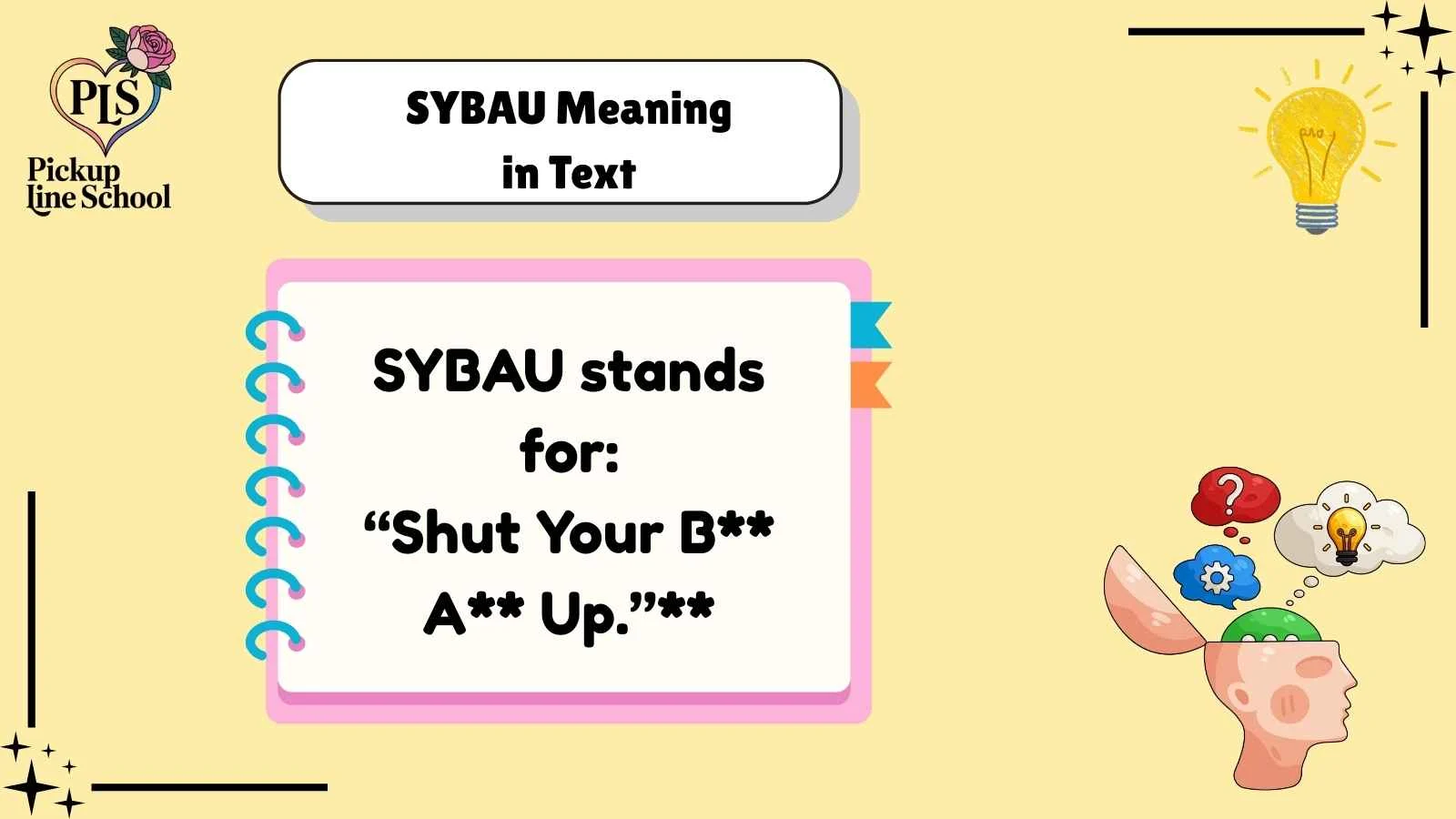
SYBAU is an internet abbreviation that stands for:
“Shut Your B** A** Up.”**
It’s a slang expression used in online conversations to tell someone to stop talking, complaining, or arguing.
While it may appear in casual chats, the phrase behind it is quite aggressive and confrontational. Because of that, it’s typically used in informal environments such as:
- Gaming chats
- Social media comment sections
- Group chats among friends
Simple Examples
Here are a few ways people might use SYBAU in text messages or online discussions:
Example 1:
Friend 1: “This game is so unfair.”
Friend 2: “Bro, SYBAU and just play.”
Example 2:
Person A: “You’re wrong about that movie.”
Person B: “SYBAU, everyone knows it was great.”
Example 3:
Gaming chat:
Player 1: “You keep complaining about lag.”
Player 2: “SYBAU and focus on the match.”
In these situations, the phrase is used to shut down the conversation abruptly.
Origin and Background of the Term
Like many modern abbreviations, SYBAU likely emerged from internet culture and online gaming communities.
Over the past two decades, digital communication has encouraged people to shorten phrases for speed and convenience. Platforms like:
- Online multiplayer games
- Discord servers
- Reddit discussions
- Twitter/X threads
have played a major role in shaping these abbreviations.
The phrase behind SYBAU has existed in spoken language for a long time. However, the abbreviated version became popular when texting culture exploded.
Gamers and internet users began compressing long or aggressive phrases into short codes. This allowed them to type quickly during fast-paced conversations.
Over time, the acronym spread across different platforms, especially among younger internet users and meme communities.
How SYBAU Is Used in Daily Life
Although it’s primarily used online, SYBAU appears in several types of everyday digital interactions.
Here are some common scenarios where you might see it.
1. Gaming Chats
Competitive gaming often leads to heated conversations.
Example:
“SYBAU and just defend the base.”
2. Friendly Arguments
Sometimes friends use it jokingly during debates.
Example:
“You think pineapple belongs on pizza? SYBAU.”
3. Social Media Comments
People may use it to dismiss someone’s opinion.
Example:
“SYBAU nobody asked.”
4. Meme Culture
In memes, it can be used humorously to exaggerate reactions.
Example caption:
“When your friend spoils the ending of a show – SYBAU.”
5. Group Chats
Among close friends, it might appear playfully.
Example:
“Bro keeps complaining about homework… SYBAU.”
However, tone matters a lot. Without context, the phrase can easily sound rude or offensive.
Emotional or Practical Meaning of SYBAU
Beyond the literal phrase, SYBAU reflects something deeper about modern digital communication.
Online spaces often move quickly, and people tend to react instantly. As a result, expressions like SYBAU are sometimes used to:
- Express frustration
- End arguments quickly
- React to repeated complaints
- Show playful sarcasm among friends
However, because the phrase is blunt, it can also create tension or hurt feelings if used carelessly.
In many communities, people prefer lighter humor or respectful disagreement instead of aggressive slang.
Understanding this emotional context helps you decide whether using it is appropriate.
Similar or Related Terms
Several internet slang terms serve a similar purpose or appear in similar contexts.
Here are a few examples:
- STFU – Short for “Shut the f*** up.” Also used to silence someone.
- GTFO – Means “Get the f*** out,” often expressing disbelief or anger.
- IDC – “I don’t care,” used to dismiss an opinion.
- SMH – “Shaking my head,” expressing disappointment.
- LMFAO – Used when laughing intensely at something.
While these phrases share the same informal internet culture, they vary in tone. Some are humorous, while others can be offensive.
Common Misunderstandings About SYBAU
Because the acronym isn’t widely known outside internet communities, people often misunderstand it.
Here are a few common misconceptions.
1. People Think It’s Harmless
Many assume it’s just playful slang. In reality, the phrase can be quite insulting depending on context.
2. Some Believe It’s a Positive Phrase
It’s not positive. It’s typically used to dismiss someone or shut down a conversation.
3. People Confuse It With Other Acronyms
Because the letters are unfamiliar, some mistake it for unrelated abbreviations.
4. It’s Not Professional Language
SYBAU should never be used in professional communication.
5. It’s Not Always Meant Seriously
Among close friends, it might be used jokingly. But tone is everything.
Understanding these nuances prevents awkward situations in conversations.
Examples of SYBAU in Sentences
Here are several natural examples showing how people might use the term in everyday texting.
- “You complain about everything… SYBAU for once.”
- “SYBAU and watch the movie already.”
- “He kept trolling in the chat until someone typed SYBAU.”
- “My friend jokingly said SYBAU when I spoiled the ending.”
- “Someone commented SYBAU during the livestream argument.”
- “I almost replied SYBAU but decided to stay polite.”
- “Gamers sometimes throw around words like SYBAU when they’re frustrated.”
- “He texted SYBAU as a joke during our group chat.”
These examples show that context determines whether it’s humorous or offensive.
Why Understanding SYBAU Matters Today
The internet has created an entirely new layer of language. Slang evolves faster than ever, and acronyms appear almost daily.
Knowing the SYBAU meaning in text helps you:
- Understand online conversations more easily
- Avoid misinterpreting messages
- Recognize aggressive or sarcastic tone
- Stay updated with modern internet culture
For bloggers, writers, educators, and parents, understanding these terms is especially valuable. It provides insight into how younger generations communicate online.
At the same time, being aware of the tone behind such phrases encourages more respectful digital communication.
After all, words carry power—even when they’re shortened into four letters.
FAQs:
What does SYBAU mean in simple words?
SYBAU is an internet abbreviation meaning “Shut Your B** A** Up.”** It’s used to tell someone to stop talking or complaining.
Is SYBAU positive or negative?
It’s generally negative or confrontational. Sometimes friends use it jokingly, but it can easily sound rude.
Where is SYBAU commonly used?
You’ll mostly see it in online gaming chats, social media comments, group chats, and meme culture.
Is SYBAU formal or informal?
It’s extremely informal slang and should never be used in professional or respectful communication.
Why do people search for SYBAU meaning?
Internet slang changes quickly. People often search the meaning when they see the acronym in texts, memes, or social media conversations.
Conclusion:
Internet slang like SYBAU shows just how quickly language evolves in the digital world. What looks like a random group of letters actually carries a strong meaning and emotional tone.
While it’s commonly used in gaming chats, social media, and casual conversations, it’s important to remember that the phrase behind it can sound harsh or disrespectful.
Understanding slang doesn’t mean you have to use it—it simply helps you navigate online conversations more confidently.
Language will continue to change as technology grows, and staying curious about new terms keeps you connected to modern communication.
