
Have you ever received a message that simply said “ofc” and paused for a second wondering what it meant? You’re not alone. In today’s fast-paced digital world, people love shortcuts, and text slang like this pops up everywhere.
The phrase “ofc meaning in text” is something many people search because it’s used so casually in chats, social media, and even work conversations. But understanding it isn’t just about translation—it’s about tone, intent, and context.
Whether you’re texting friends, replying to someone special, or just trying to keep up with online language, knowing what “ofc” means can help you respond more naturally.
What Does OFC Meaning in Text?
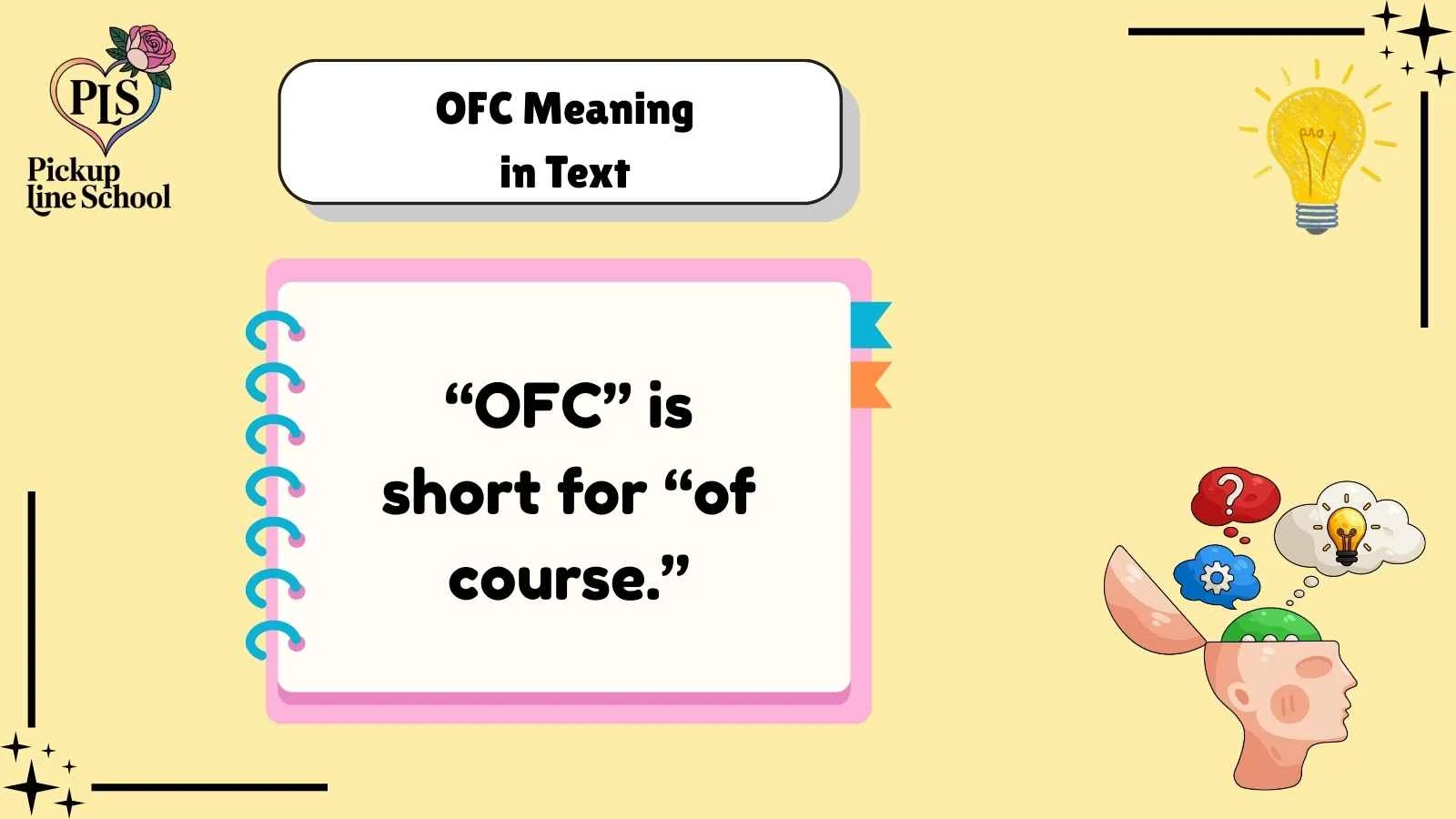
“OFC” is short for “of course.”
It’s used to quickly say yes, definitely, or obviously—but in a relaxed, informal tone.
Instead of typing the full phrase, people shorten it to save time and keep conversations flowing smoothly.
Real-Life Examples:
- “Can you help me with this?”
→ “Ofc!” - “Are you coming to the party?”
→ “Ofc I am!” - “You like pizza, right?”
→ “Ofc 😂”
In all these cases, “ofc” shows agreement or confirmation—but in a friendly, casual way.
Origin and Background of the Term
“OFC” didn’t come from a dictionary—it evolved naturally from texting culture.
Back in the early days of SMS, people had character limits and slow typing speeds. So, abbreviations like “LOL,” “BRB,” and “OFC” became popular to communicate faster.
As messaging apps and social media platforms grew, these shortcuts stuck around—not because they were necessary, but because they became part of internet culture.
Think of it like this: saying “ofc” feels lighter and more natural than typing “of course” every time. It’s quick, expressive, and fits perfectly into today’s fast conversations.
How OFC Is Used in Daily Life
You’ll see “ofc” used in all kinds of situations. Here are some common ways people use it:
1. Agreeing Quickly
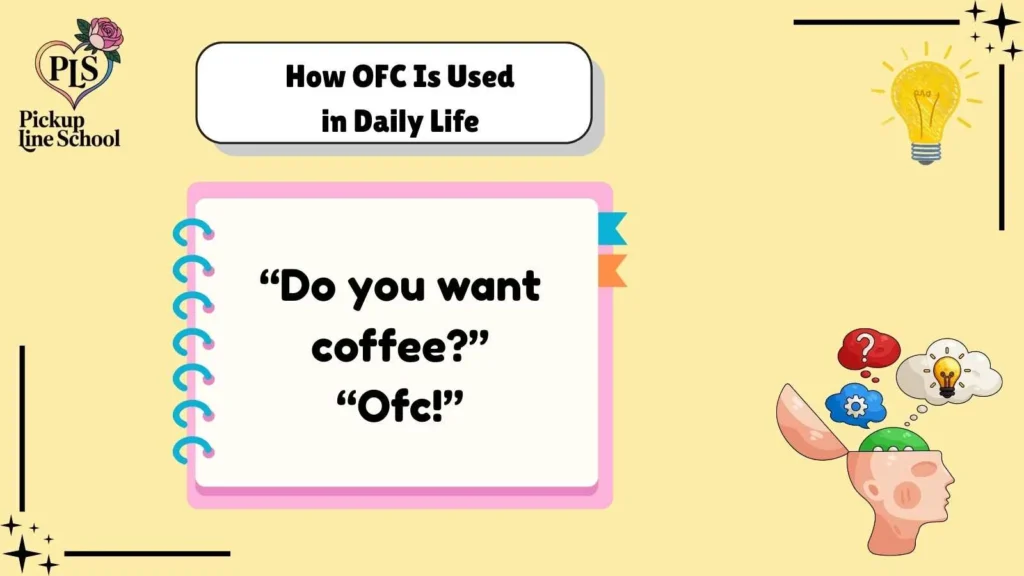
- “Do you want coffee?”
→ “Ofc!”
2. Showing Enthusiasm
- “You’ll support me, right?”
→ “Ofc, always!”
3. Confirming Plans
- “We’re meeting at 6?”
→ “Ofc 👍”
4. Casual Conversations
- “You watched that show?”
→ “Ofc, it’s amazing!”
5. Playful or Sarcastic Tone
- “You forgot again?”
→ “Ofc I did 😅”
6. Friendly Reassurance
- “Can I trust you?”
→ “Ofc you can.”
The tone changes depending on context—but the core meaning stays the same.
Emotional or Practical Meaning of OFC
“OFC” is more than just a shortcut—it carries emotion and intent.
When someone says “ofc,” it can mean:
- Reassurance → “Ofc I’m here for you.”
- Excitement → “Ofc I’m coming!”
- Confidence → “Ofc I can do it.”
- Closeness → It feels more personal than formal language
In relationships, it can even show care and support. A simple “ofc” can make someone feel understood and valued.
Similar or Related Terms
Here are some common alternatives to “ofc” and how they differ:
- Sure – Simple and polite, slightly more neutral
- Yeah / Yup – Casual agreement
- Definitely – Stronger, more enthusiastic agreement
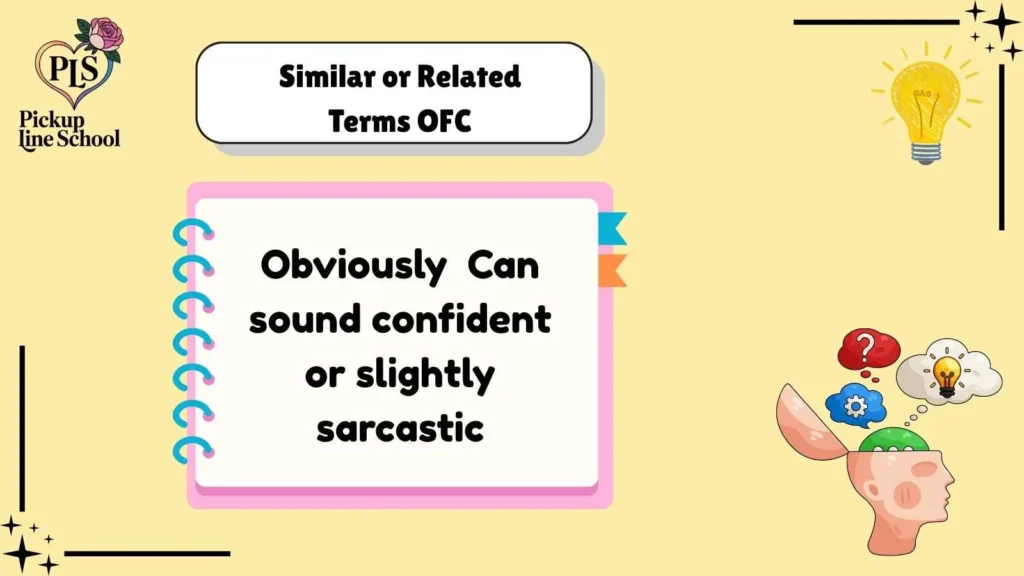
- Obviously – Can sound confident or slightly sarcastic
- For sure – Friendly and reassuring
- Absolutely – More formal but very strong agreement
👉 Key Difference:
“OFC” feels more relaxed and conversational compared to most of these.
Common Misunderstandings About OFC
Even though it’s simple, people sometimes misunderstand “ofc.” Let’s clear that up:
1. It’s Always Positive
Not always—it can be sarcastic depending on tone.
2. It’s Formal
Nope, it’s strictly informal.
3. It’s Only for Young People
While younger users use it more, people of all ages now use it online.
4. It Means “Obviously” in a Rude Way
Sometimes, but not always—it depends on context.
5. It’s Unprofessional Everywhere
It can be used in casual work chats, but not in formal emails.
6. It Always Shows Excitement
Sometimes it’s just a quick, neutral reply.
Examples of OFC in Sentences
Here are some natural, everyday ways to use “ofc”:
- “Ofc I’ll help you, don’t worry.”
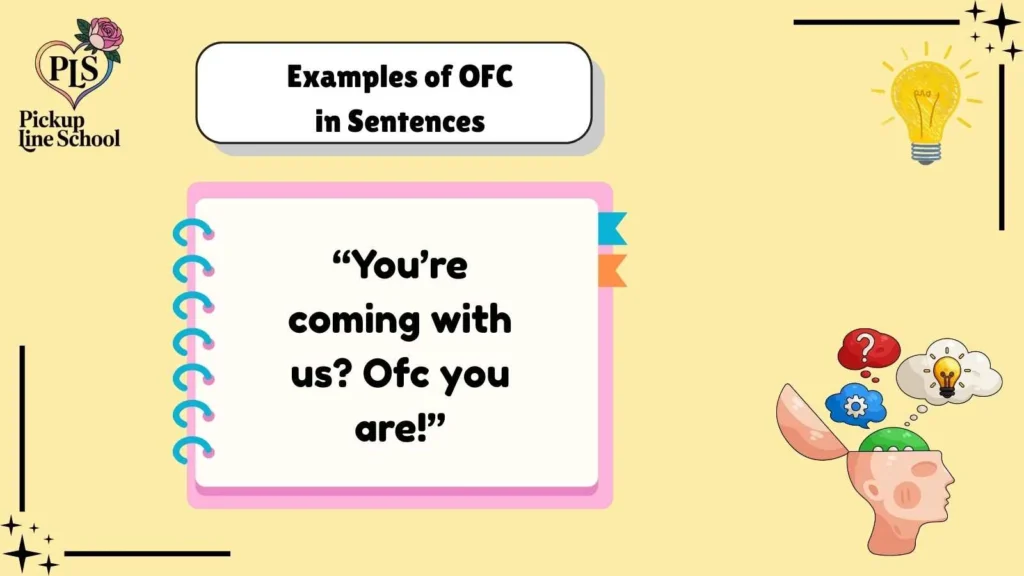
- “You’re coming with us? Ofc you are!”
- “Ofc I remember your birthday.”
- “Can I borrow this? Ofc.”
- “Ofc I trust you.”
- “Ofc that was your idea 😂”
- “Ofc I miss you.”
- “Ofc we can talk later.”
Each sentence feels relaxed, friendly, and real—just like everyday conversations.
Why Understanding OFC Matters Today
In today’s digital world, communication is faster than ever. People don’t always write full sentences—they rely on short, expressive phrases.
Understanding terms like “ofc” helps you:
- Communicate more naturally
- Avoid confusion in chats
- Connect better with others
- Stay updated with modern language
Whether you’re texting friends or chatting online, knowing these small details can make a big difference in how your message is received.
FAQs:
What does ofc meaning in text in simple words?
It simply means “of course”—used to say yes or agree in a casual way.
Is ofc positive or negative?
Mostly positive, but it can sound sarcastic depending on tone and context.
Where is ofc commonly used?
It’s used in text messages, social media, chats, and online conversations.
Is ofc formal or informal?
It’s completely informal and shouldn’t be used in professional emails.
Why do people search for ofc meaning in text?
Because it’s widely used online, and many people want to understand its tone and correct usage.
Conclusion:
“OFC” might look like just three simple letters, but it carries a lot of meaning in everyday communication. From quick replies to emotional reassurance, it’s become a natural part of how we connect online.
By understanding how and when to use it, you’re not just learning slang—you’re improving how you communicate in a digital world.
